Lumitype
Year
2024
Problem
Analog typography often relies on familiar, controllable materials, which can limit experimentation with processes that are not directly visible. The central challenge behind Lumitype was how to design with an invisible natural phenomenon and translate it into a functional typographic system without losing the authenticity of the source.
Approach
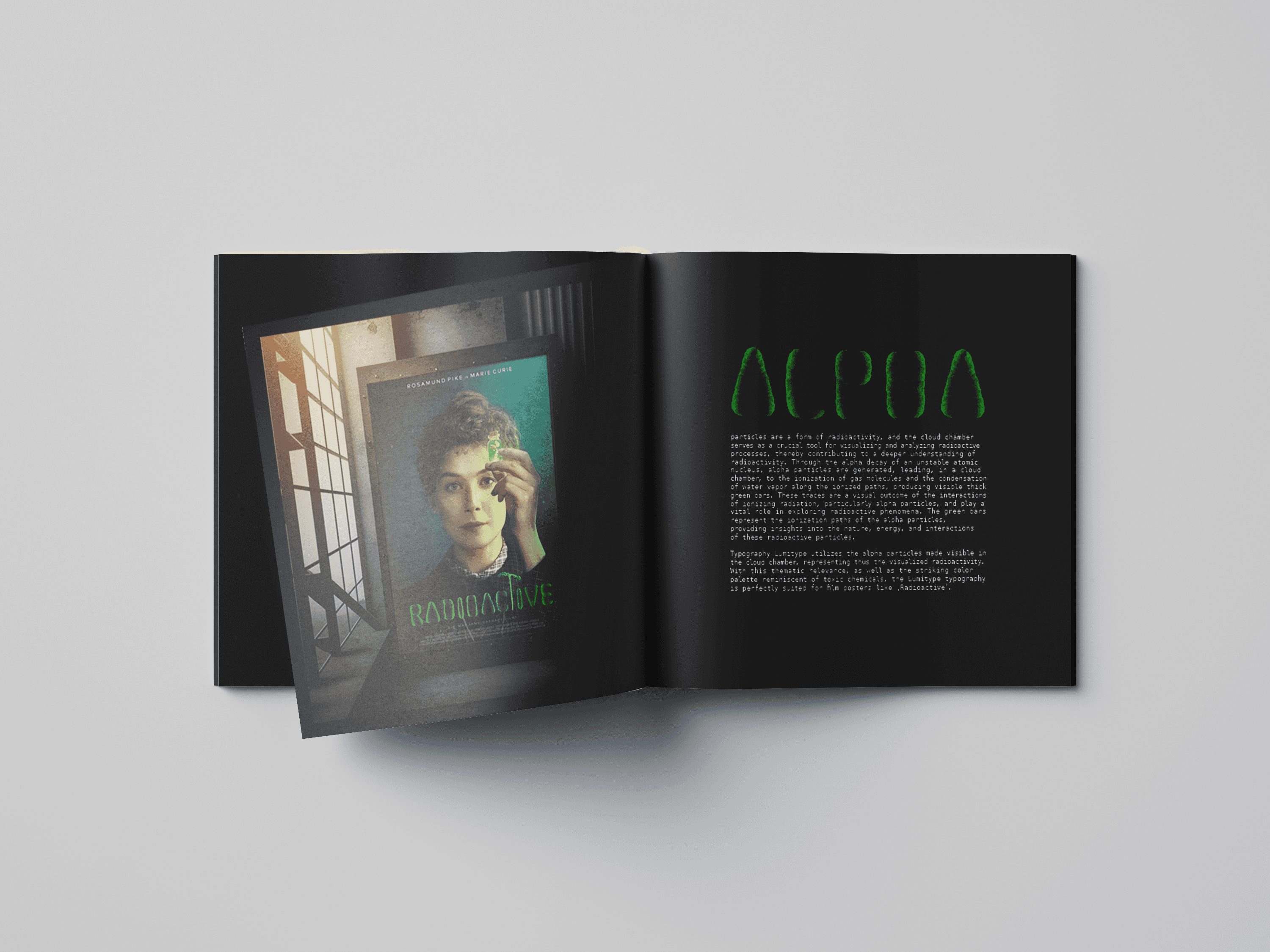
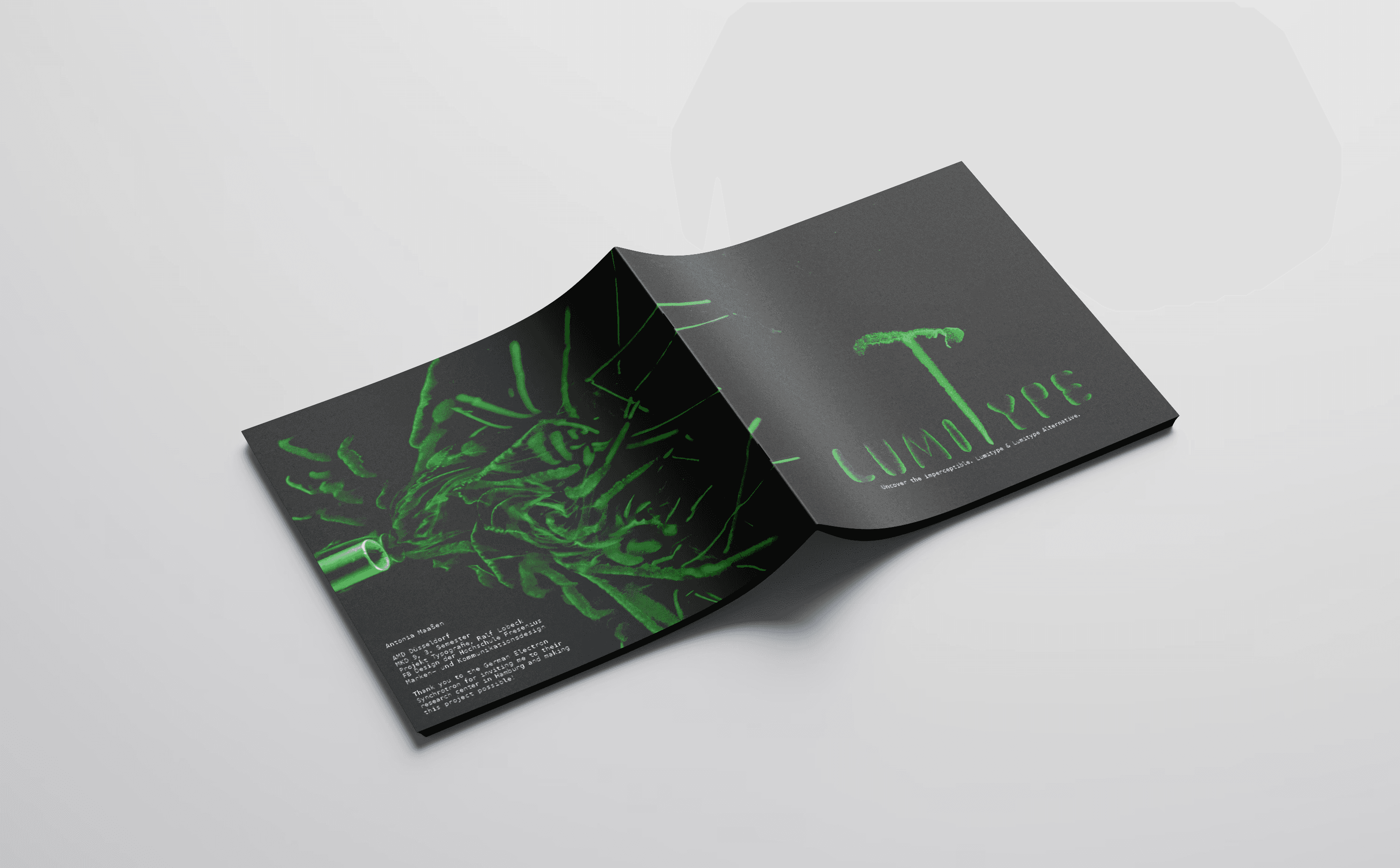
Lumitype uses radioactive decay trails as typographic material. Radiation was made visible through a cloud chamber, where alpha particles create condensation traces in the air. These traces were documented in German research environments using photography and video, then selected and refined in post production to increase legibility while preserving their organic, living character. The concept intentionally merges scientific observation with design decision making, turning a normally unnoticed process into a usable set of letterforms.
Outcome
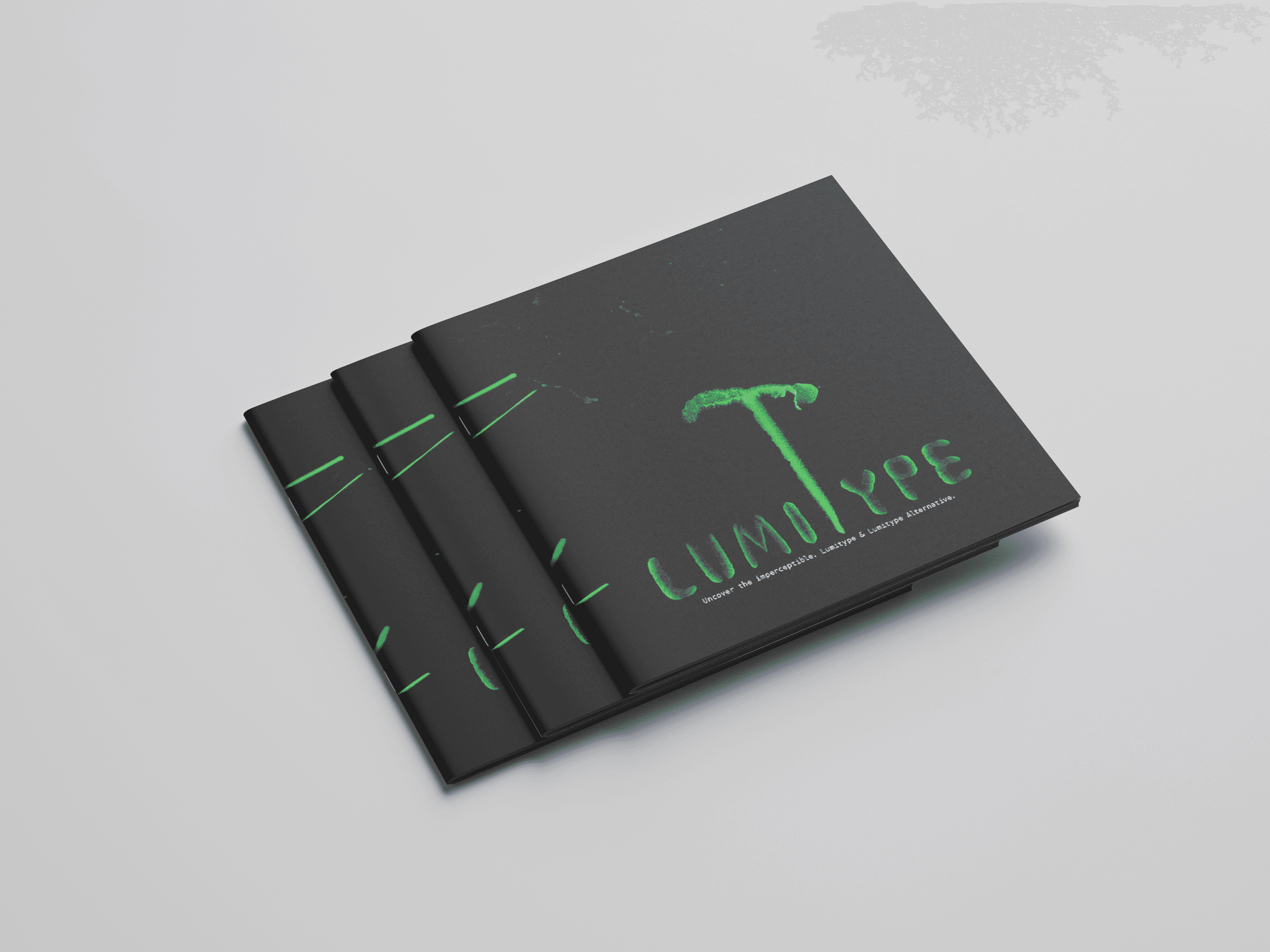
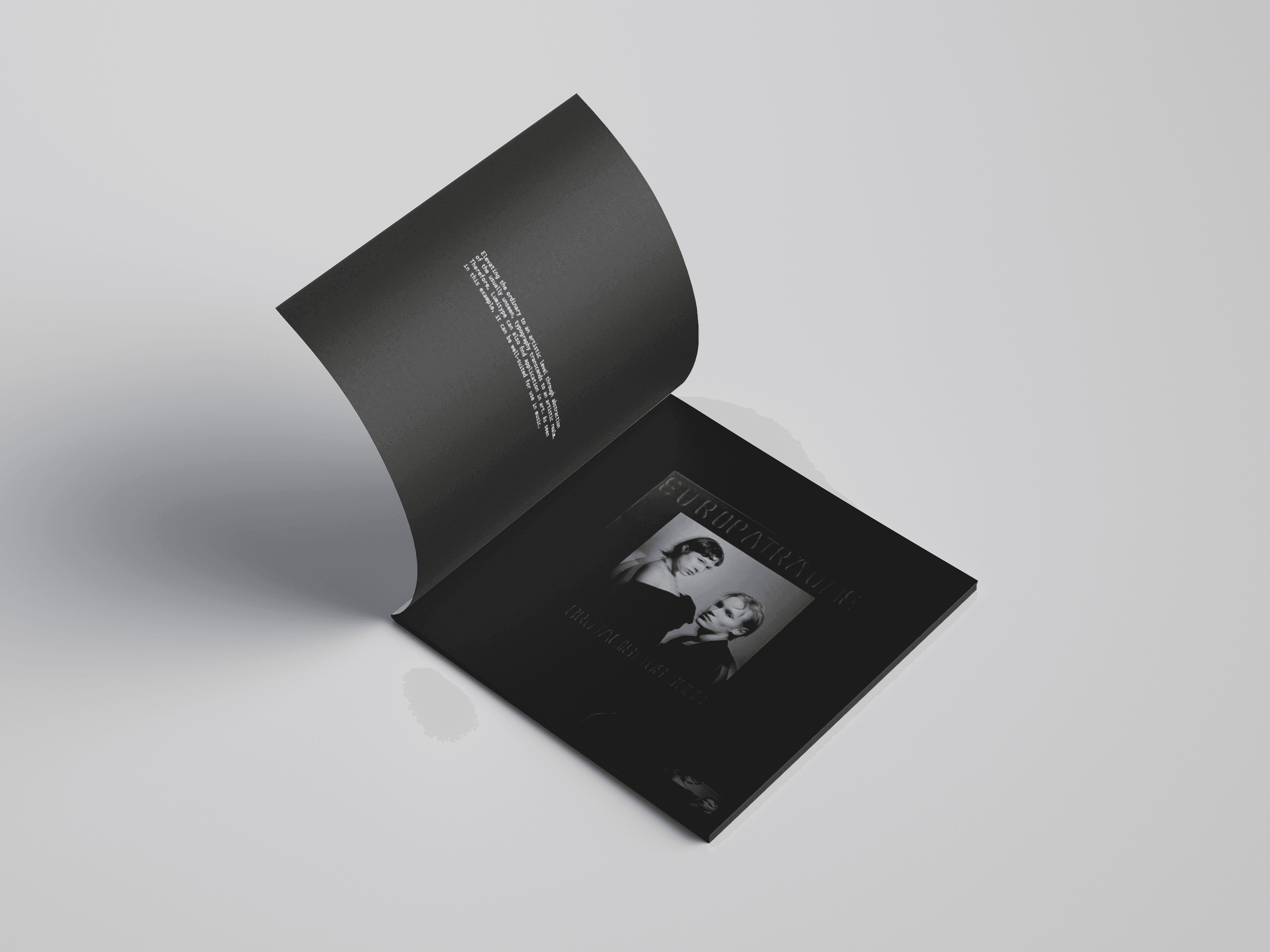
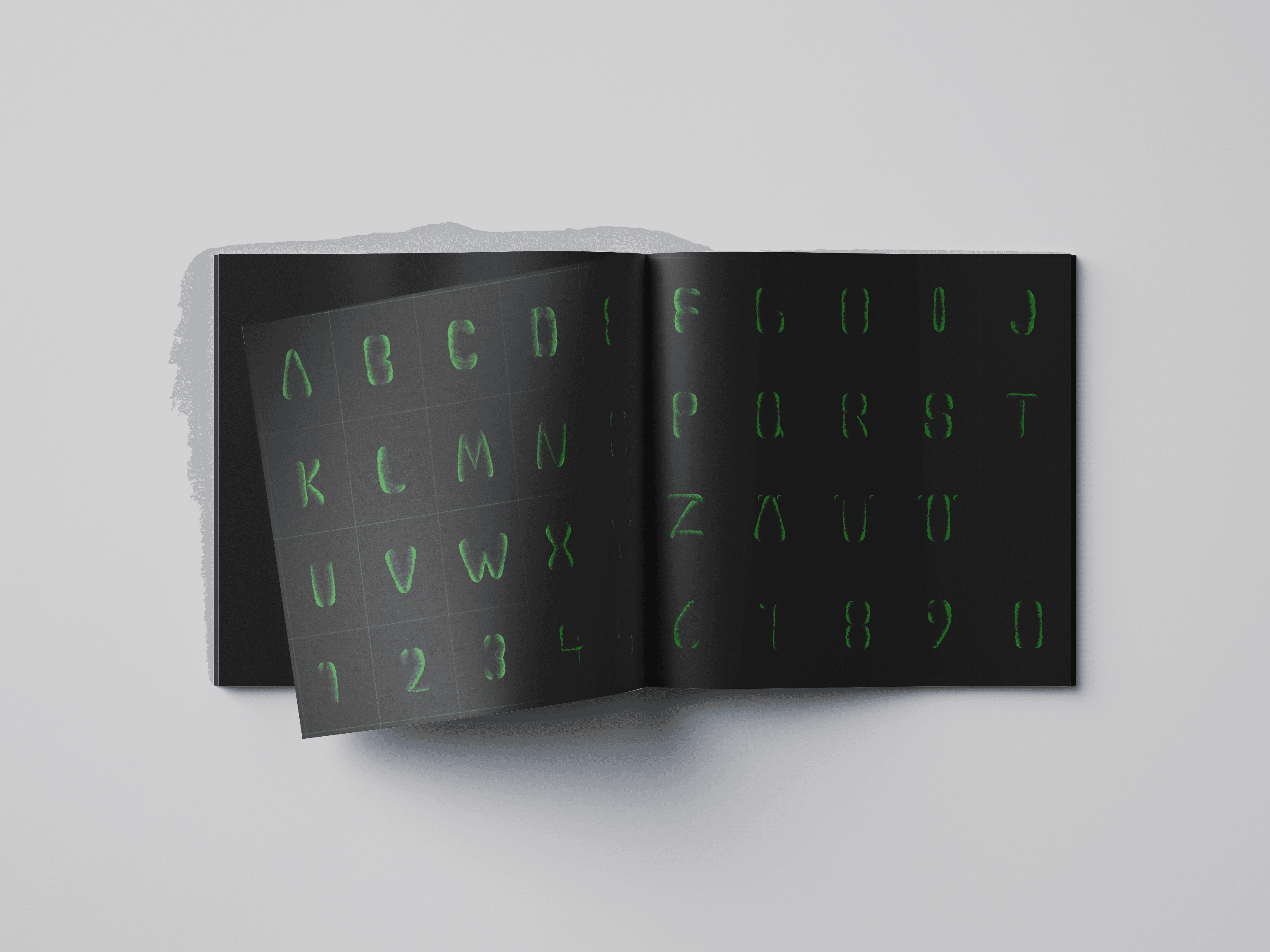
The result is Lumitype, a typeface generated from radiation, light, and movement, presented through a booklet that demonstrates its applications across different contexts, from science related communication to music related design. The alphabet is organized in a square grid inspired by the periodic table, linking the visual system back to its atomic origin. Overall, Lumitype translates an invisible natural process into a tangible, functional, and poetic design outcome that showcases how science and design can intersect.